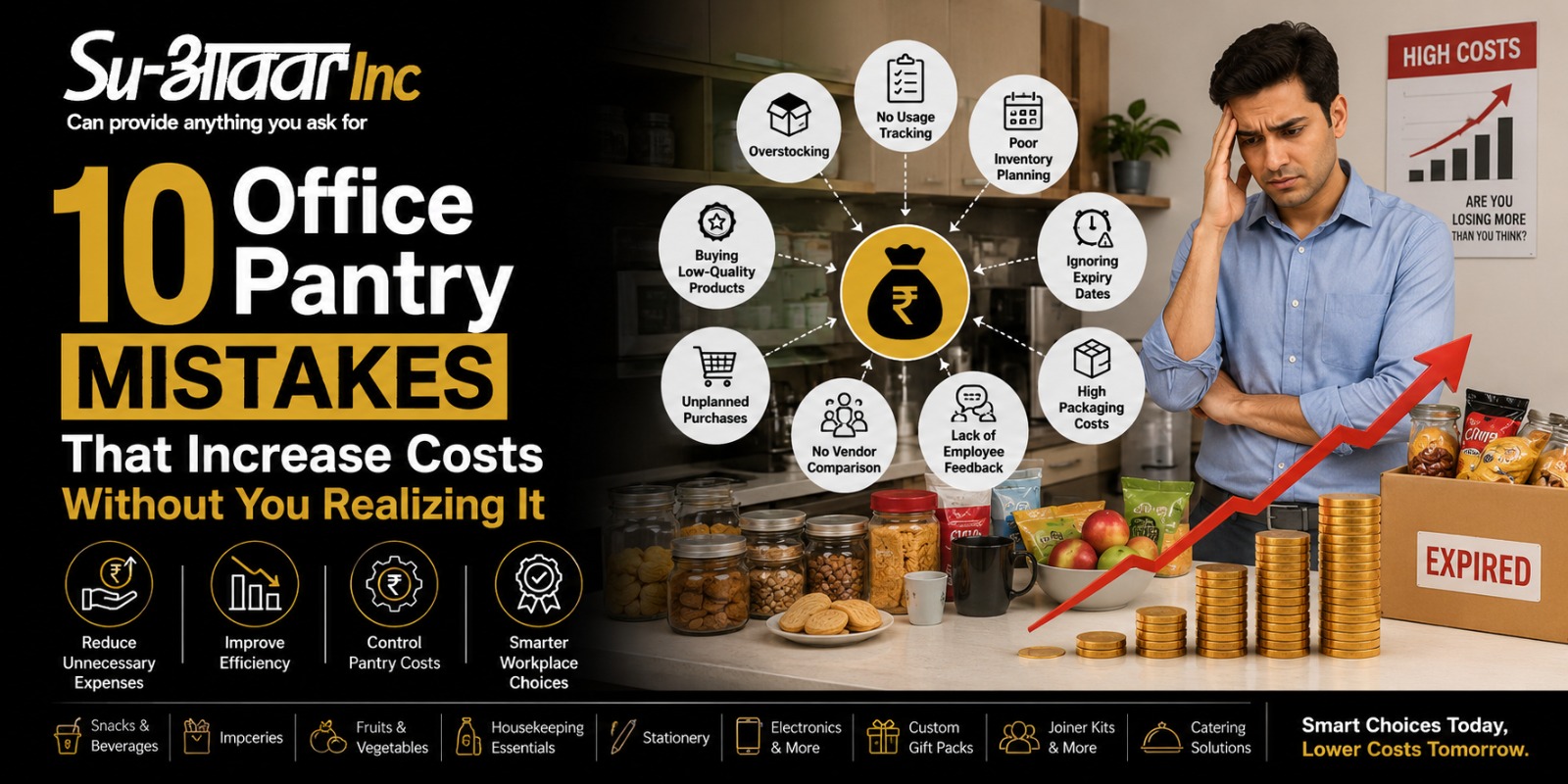
A well managed office pantry does more than just dish out tea , coffee, and snack-ish stuff—it builds a better workplace experience for employees and it also leaves a good impression with clients and visitors. Still, a lot of companies unknowingly end up paying extra for pantry supplies, mainly because of sketchy planning and inefficient procurement ways , not even realizing it. So whether you’re steering a startup, running a corporate office, or managing a co-working space, it helps to dodge a few common blunders. That way you can cut down on avoidable expenses while keeping people happy. Below are 10 office pantry mistakes that might be raising your costs without you noticing at all. Lots of businesses end up buying pantry items only when stocks run low, you know? So it goes to last minute purchasing, prices feel higher, and then there are those unnecessary add on items you dident really need. So instead, try to make a monthly procurement plan from your team’s actual consumption levels. When you plan ahead, spending stays in check , and the essential stuff is always in stock or ready. Working with different suppliers for snacks, beverages, groceries and other essentials can seem practical, but it usually also drags up operational costs. You end up with multiple invoices, extra delivery charges, and a bunch of follow ups that just eat time and resources, kind of quietly at first. When you pick one B2B procurement partner instead, everything feels less tangled. It streamlines buying, cuts the paperwork, and supports steadier pricing across the board. One of the biggest reasons people end up wasting stuff in the pantry is because the inventory tracking is poor. Businesses usually only notice expired products or they find themselves stuck with too much stock , once it’s already too late. Keep a simple record of what you have and check the stock levels on a routine basis. Also using the “ first in , first out” (FIFO) approach helps as well , since it keeps older items moving sooner. Buying in bulk without understanding actual consumption can lead to unnecessary storage issues and expired products. Purchase according to usage patterns rather than assumptions. Review monthly consumption reports to determine the right quantity for each item. Choosing the cheapest products may look cost-effective up front, but low-grade tea coffee, snacks or groceries tend to cause employee irritation and then you end up with constant replacements, ya know, after a while. Finding a middle ground between quality and price usually gives better long term value, and it makes the break room atmosphere more pleasant, overall. Employees today appreciate better food choices like roasted nibbles, dry fruits, fresh fruits, and nutritious drinks. But if a company leans only on candy snacks and soft drinks it can really lower satisfaction, and also create more waste if people don’t touch the items Having a balanced pantry with health focused options helps employee wellness, but it also improves how the pantry gets used overall. Without tracking consumption , businesses often don’t notice which products are being overused, underused, or just wasted. By doing regular usage reviews, companies can see purchasing patterns more clearly, which lets them optimize inventory, and cut those unnecessary, extra expenses. Pantry requirements change throughout the year. Summer kind of demands more cool drinks, plus fresh fruits , and yeah winter tends to boost demand for tea, coffee, and thick soups. Thinking through what to buy based on the season helps avoid that extra stock stuff, and it also keeps employees feeling pretty satisfied. Small habits such as taking excessive snacks home, opening multiple products at once, or wasting beverages can quietly increase monthly expenses. Simple pantry guidelines encourage responsible usage without making employees feel restricted. Many businesses keep ordering from the same suppliers, out of habit, without really checking pricing, product quality, or service levels. Gradually, this might make you pay more than you actually need, even if nothing “obviously” changed. Try reviewing your procurement expenses every few months, and see if your current buying process is giving the best overall value. Working with a dependable B2B supplier can simplify procurement, while also supporting steady quality and on time deliveries. An office pantry is an important part of the workplace but it should also be managed efficiently, because small procurement slip ups can slowly build up operational costs , hurt employee satisfaction , and create extra admin overhead that nobody really asked for. If you plan the purchases ahead, keep an eye on stock levels, go for well made items, and partner with a trusted procurement ally, companies can lower spending while also building a smoother work environment for their team. At Suhaar Inc. , we help companies make office procurement more straightforward with a broad mix of workplace essentials , like snacks and beverages , groceries , fresh fruits and vegetables , housekeeping supplies , stationery , customized gift packs , electronics , employee onboarding kits, catering options, and more. Our single-vendor setup helps organizations save time, boost efficiency, and handle everyday workplace supplies with less friction, basically easier. 1. Buying Supplies Without a Plan
2. Ordering from Multiple Vendors
3. Ignoring Inventory Management
4. Overstocking Pantry Items
5. Choosing Price Over Quality
6. Not Offering Healthy Snack Options
7. Not Monitoring Pantry Usage
8. Ignoring Seasonal Requirements
9. Lack of Pantry Policies
10. Not Reviewing Procurement Costs Regularly
Build a Smarter Office Pantry